AI Data Centres Now Ship in Containers. Municipalities Should Change How They Evaluate Them.
October 21, 2026
Founder, Developer, AI Researcher
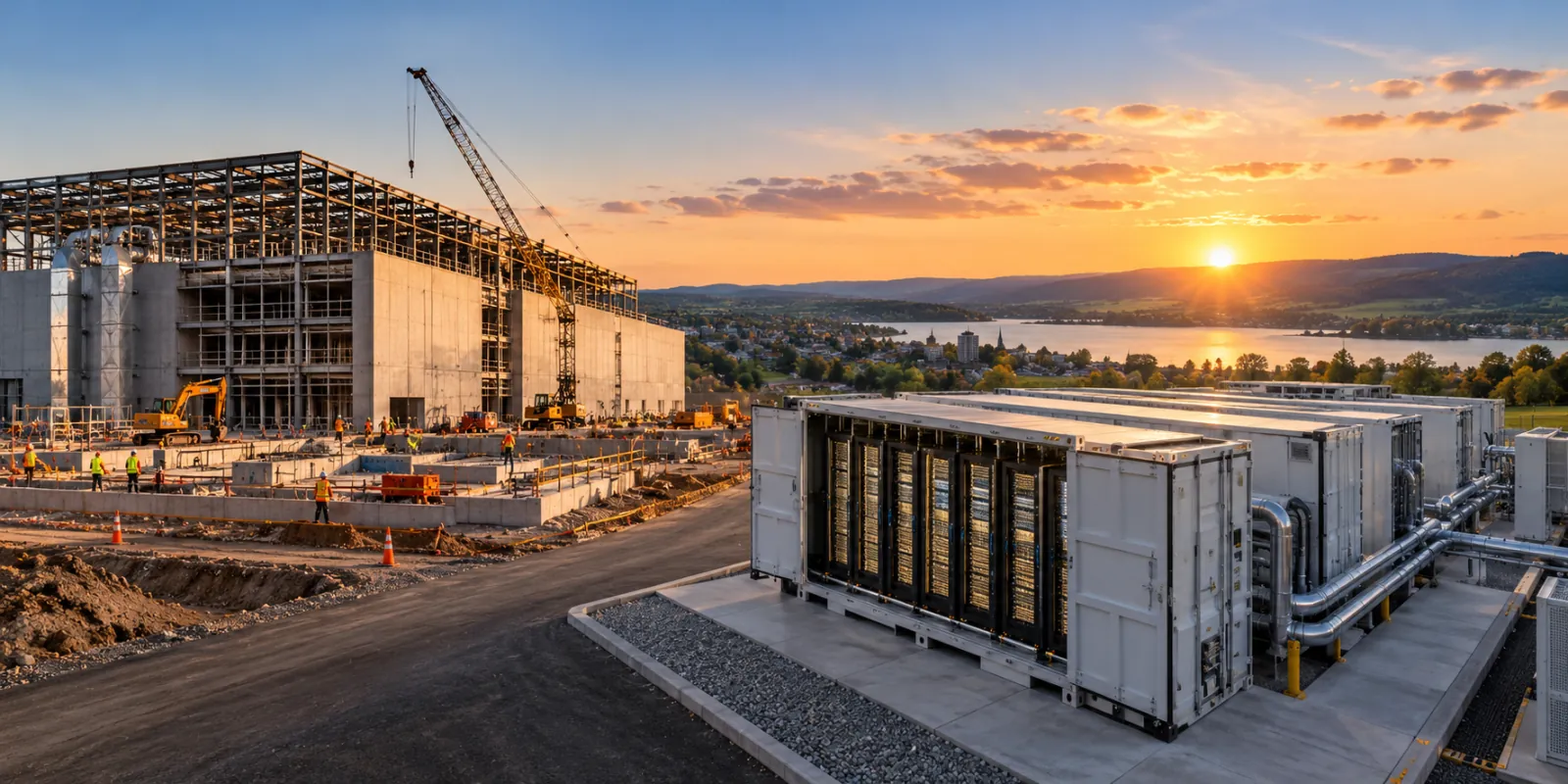
NVIDIA announced its DSX POD architecture today. It’s a transportable AI computing facility built around the next-generation Vera Rubin hardware, with most of the integration done in a factory before it ships. NVIDIA says that cuts deployment at a prepared site from about six months to as little as 14 days.
For the operator, that’s a great deal. Very expensive GPUs start earning money months sooner, and the messy engineering gets standardized.
For the town hosting it, I think the deal just got worse, and most economic development offices are still scoring these projects the way they’d score a factory.
The headline number
When a company announces a billion-dollar AI data centre, most of that billion is GPUs and the hardware around them. Almost none of it is made in the municipality, and most of it isn’t made in Canada. You can have a huge capital number and very few permanent local jobs attached to it.
That doesn’t make these projects bad. Data centres pay property tax and they keep skilled trades busy during construction. But the total value of a project and the part that stays with residents are two different numbers, and the press release only gives you the first one.
What containers change
Putting a data centre in a shipping container isn’t new. Sun Microsystems shipped Project Blackbox in 2006. What’s new is how dense and complete the thing is when it arrives.
A conventional build means months of electrical work, cooling integration and commissioning, a lot of it done by local contractors. With a factory-integrated pod, much of that happens somewhere else. Local crews still pour foundations, run utility connections and in many cases build out serious electrical and cooling capacity. The integration work is what moves.
I wouldn’t read the six-months-to-14-days figure as a matching cut in local labour. Time and labour aren’t the same measure, and the 14 days assumes the site is already prepared. But the direction is obvious. Unless the pods are built nearby, more of the skilled work happens in someone else’s community.
And permanent employment was already thin. Data centres need a lot of capital and not many people. Monitoring, workload management and software operations can all be done remotely, so the on-site team is mostly facilities and security. A project that promises 1,000 construction jobs and 50 permanent ones is a very different thing from a plant that employs 1,000 people for decades. Both can be worth having. They shouldn’t be judged with the same spreadsheet.
The real constraint is power
In Ontario, the scarce resource for a project like this is electricity. High-density AI computing needs a lot of capacity, and the municipality may be asked to support new substations, transmission upgrades or water infrastructure to make it happen.
A megawatt committed to a data centre may not be available, at least for a while, to a housing development or another employer that wanted to expand. Maybe the data centre is still the better use. But someone should actually make that comparison instead of treating “can we accommodate it” as the only question. Water, noise, backup generators and whether the waste heat could be reused all belong in the same conversation.
What to ask before offering anything
How many jobs will physically sit in the municipality, counted in person-years for construction and separately for permanent roles? How much of the capital spend is imported equipment versus local construction and procurement? How many megawatts at peak, and who pays for the upgrades, the developer or the ratepayers? What happens to the tax base, and what happens when the hardware is obsolete?
The investment split is the one that changes the conversation fastest. A $2 billion project where $1.7 billion is imported equipment is nothing like a $2 billion manufacturing investment, even though the headline is identical. (Those numbers are illustrative, but councils should be asking for the real breakdown.)
The tax question is less obvious. Municipalities need to know how modular equipment will be treated for property assessment, because a large announcement doesn’t automatically become a large assessed value. Equipment that arrived on a truck can leave on one.
That last part also matters for the long term. AI hardware turns over in a few years. Containers make upgrades easier, and they also make it easier to pull the valuable equipment off a site and leave the concrete, the substation and the fence behind. Decommissioning obligations and financial security should be in the agreement before anything is approved.
Where there are public incentives, the promises should be written into the contract with reporting requirements and a way to claw the money back if the jobs or local spending don’t show up. “Local investment” should be defined, not assumed.
The Canadian question
If the chips are made abroad, assembled into pods abroad and run remotely by a company headquartered abroad, the host community is mostly providing land and power. That can still be worth doing, especially if the tax revenue is real or the capacity ends up serving Canadian researchers.
Hosting computing equipment and building an AI industry are two different things, though. The second one depends on where the hardware is manufactured, where the systems are engineered and where the people who do that work live. (It’s the question I keep coming back to with Zeever.ca, my research project on Canadian sovereign AI compute.)
Municipalities can’t fix that on their own. Electricity planning, industrial incentives and national AI strategy sit with the province and Ottawa. But the substation goes in a municipality, and so does the empty pad when the pods move on.
DSX POD is a real engineering accomplishment, and it will make AI capacity faster to deploy everywhere. I suspect the result is that councils will see a lot more of these proposals, on much shorter timelines, and the ones that already have a scorecard ready will get much better deals than the ones still counting the headline number.